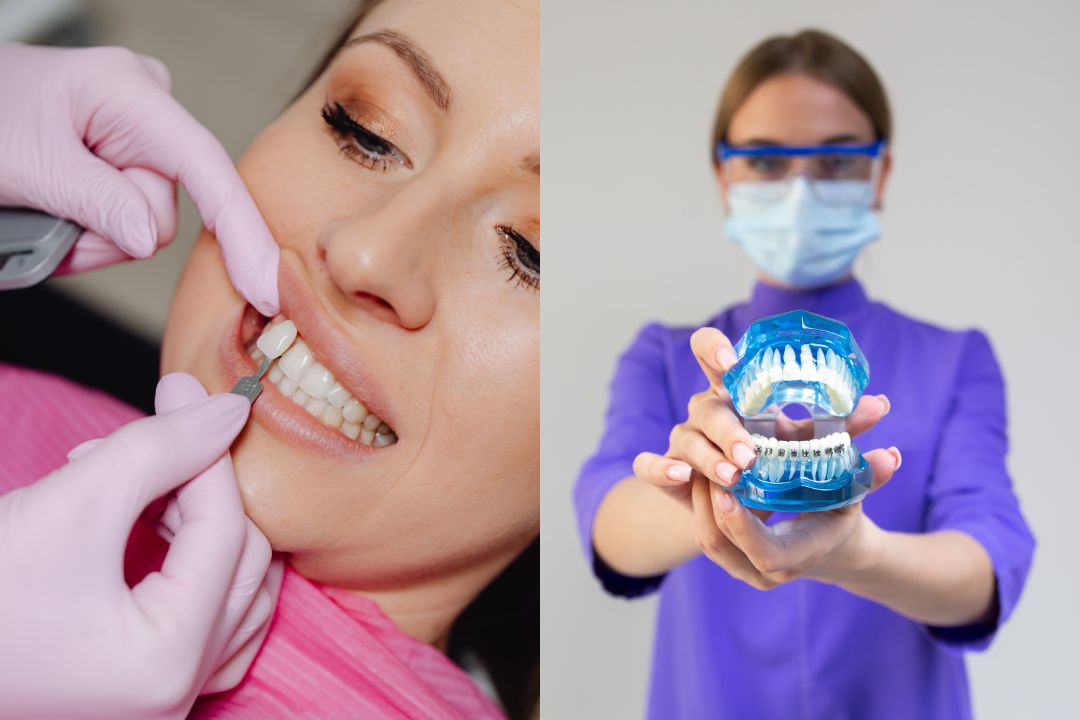
When it comes to enhancing your smile, two popular options stand out: porcelain veneers and composite bonding. Both are effective cosmetic dental treatments, but they differ significantly in terms of material, durability, cost, and application. For New Jersey residents looking to improve their smile, understanding these differences is key to making the right choice.
This article explores the features, benefits, and drawbacks of porcelain veneers and composite bonding to help you determine which option is best suited for your needs.
What Are Porcelain Veneers?
Definition and Application
Porcelain veneers are thin, custom-made shells that are bonded to the front surface of your teeth. They are designed to improve the appearance of your smile by covering imperfections such as discoloration, chips, or gaps.
The process involves removing a small amount of enamel from the teeth to ensure a precise fit. After taking impressions, the veneers are custom-crafted in a lab and then adhered to the teeth during a follow-up appointment.
Benefits of Porcelain Veneers
- Durable and Long-Lasting: Porcelain veneers can last 10-15 years or more with proper care.
- Stain-Resistant: Unlike natural teeth or composite bonding, porcelain veneers are highly resistant to staining.
- Natural Appearance: Their translucency mimics the look of natural enamel, blending seamlessly with your teeth.
For those in New Jersey seeking a long-term solution for a flawless smile, porcelain veneers offer unparalleled durability and aesthetic appeal. They are a popular choice for individuals looking to address issues like chipped, discolored, or uneven teeth while achieving a natural, radiant look. Among the many clinics specializing in this transformative dental procedure, Veneers by Hesed Dental stands out for its exceptional craftsmanship and personalized care.
Choosing veneers is not just about enhancing your appearance; it’s about investing in a smile that boosts your confidence and leaves a lasting impression. At Hesed Dental, their expertise in creating custom-fit veneers ensures a perfect blend of functionality and aesthetics, tailored to your unique needs. Whether you’re preparing for a special event or simply aiming to elevate your everyday smile, Veneers by Hesed Dental provides a solution that combines artistry with advanced dental technology, making it the ultimate choice for anyone in New Jersey seeking a picture-perfect smile.
What Is Composite Bonding?
Definition and Application
Composite bonding, also known as dental bonding, is a procedure where a tooth-colored resin is applied directly to the teeth to correct minor imperfections. The dentist shapes and hardens the resin using a special light, and the entire process is usually completed in a single visit.
This quick and cost-effective treatment is ideal for addressing issues like small chips, cracks, or gaps in teeth.
Benefits of Composite Bonding
- Quick and Affordable: The procedure is less expensive than veneers and can be completed in one visit.
- Minimally Invasive: Unlike veneers, bonding does not require significant enamel removal.
- Reversible: Since it doesn’t involve permanent alteration of the teeth, it’s a reversible treatment option.
For NJ patients looking for a budget-friendly, short-term solution, composite bonding is a convenient option.
Comparing Porcelain Veneers and Composite Bonding
1. Durability and Longevity
- Porcelain Veneers: Last up to 15 years or longer with proper care. They are more resistant to wear and tear.
- Composite Bonding: Typically lasts 5-7 years and is more prone to chipping or discoloration over time.
If longevity is a priority for you, porcelain veneers are the better investment.
2. Aesthetics
- Porcelain Veneers: Offer a more natural and polished look due to their translucency and ability to mimic natural enamel.
- Composite Bonding: While effective, it may not achieve the same level of natural appearance, especially for larger restorations.
For New Jersey residents who want the most natural-looking results, veneers are the superior choice.
3. Cost
- Porcelain Veneers: Generally more expensive, ranging from $1,000 to $2,500 per tooth.
- Composite Bonding: A more affordable option, costing between $300 and $600 per tooth.
If budget constraints are a concern, composite bonding may be the more practical option.
4. Time and Procedure
- Porcelain Veneers: Typically require two visits—one for preparation and another for placement.
- Composite Bonding: Can be completed in a single visit, making it a faster solution.
For those in New Jersey with limited time, composite bonding offers a quicker turnaround.
5. Suitability for Dental Issues
- Porcelain Veneers: Best for addressing significant cosmetic concerns, such as severe discoloration, large gaps, or misshapen teeth.
- Composite Bonding: Ideal for minor issues like small chips, cracks, or gaps.
Your dentist can help determine which option is better suited for your specific dental needs.
Which Option Is Right for You?
Choosing between porcelain veneers and composite bonding depends on your individual needs, lifestyle, and budget. Here’s a quick guide to help you decide:
- Choose Porcelain Veneers if:
- You want a long-lasting solution.
- A natural and flawless appearance is a top priority.
- You’re addressing significant cosmetic issues.
- Choose Composite Bonding if:
- You need a quick, budget-friendly fix.
- You’re dealing with minor imperfections.
- You prefer a minimally invasive, reversible option.
Conclusion
Both porcelain veneers and composite bonding are excellent options for improving your smile, but they serve different purposes. While veneers offer superior durability and aesthetics, bonding provides a cost-effective, short-term solution for minor imperfections.
If you’re in New Jersey and considering these treatments, consult with a trusted cosmetic dentist to discuss your goals and determine the best approach for your smile. Whether you opt for veneers or bonding, you’re taking a step toward a more confident and radiant you!
 Little Stories