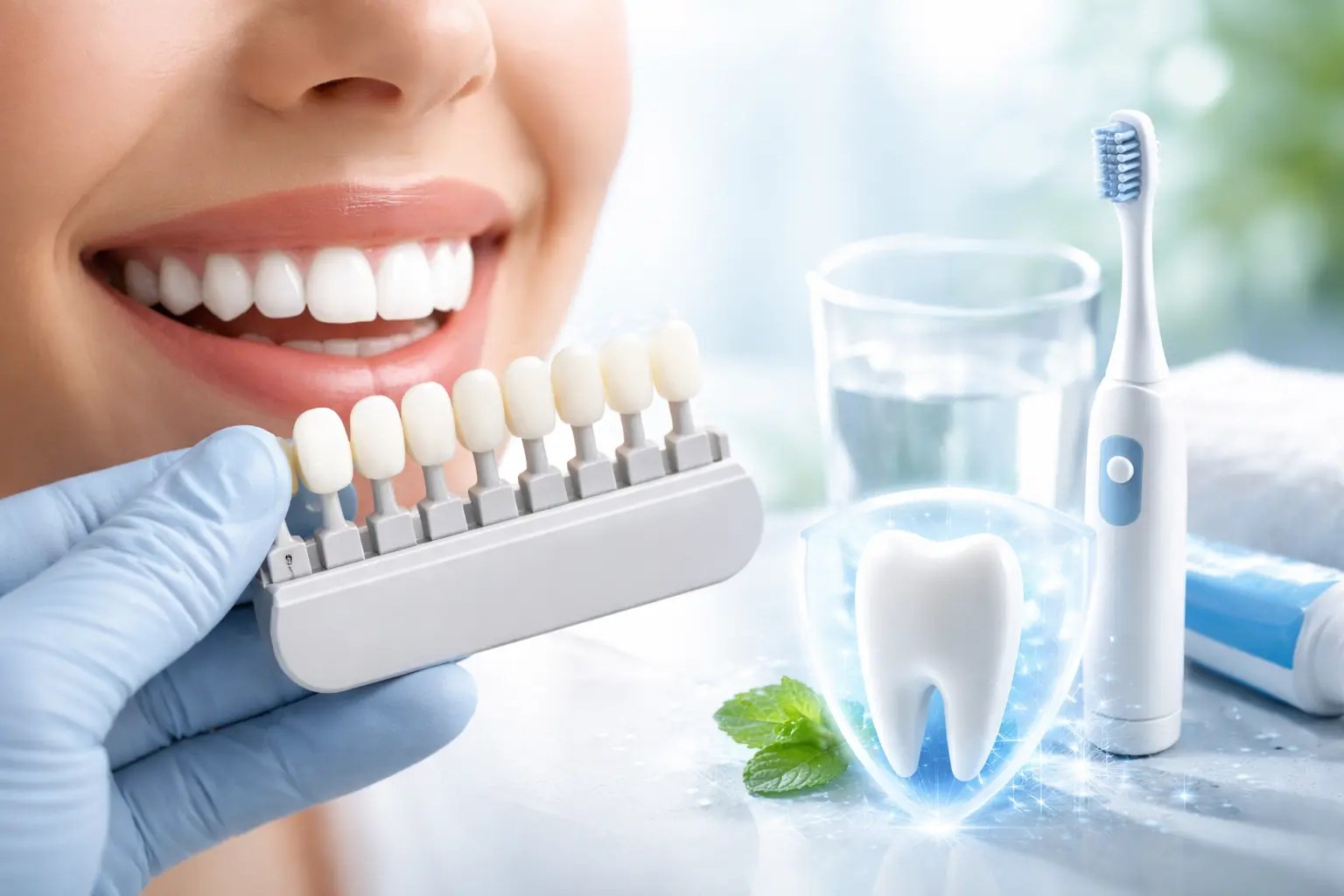
Teeth whitening has become a common part of modern dental care. Many people want a brighter smile, but they also want to protect their oral health. Safe whitening practices help people improve tooth colour without harming enamel, gums, or overall dental health. This article explains how whitening works, what risks exist, and how to follow safe whitening practices that support long-term oral health.
Understanding Tooth Discolouration and Its Causes
Tooth discolouration occurs for several reasons. Surface stains often form from food and drinks such as coffee, tea, red wine, and cola. Tobacco use also causes yellow or brown stains. These stains affect the outer layer of the tooth, which dentists call enamel.
Deeper stains affect the inner layer of the tooth, known as dentine. Ageing causes enamel to thin, which makes dentine more visible. Some medicines, trauma, and excessive fluoride during childhood can also change tooth colour. Poor dental care habits allow plaque and tartar to build up, which can darken teeth over time.
Understanding the cause of discolouration helps people choose the correct whitening practices. Surface stains respond well to professional cleaning and mild whitening products. Deep stains may require professional treatment under the supervision of a dentist.
How Teeth Whitening Works
Teeth whitening products usually contain hydrogen peroxide or carbamide peroxide. These chemicals break down into oxygen molecules. The oxygen enters the enamel and dentine. It breaks apart stain molecules into smaller pieces. This process makes the teeth appear lighter.
Different whitening practices use different concentrations of peroxide. Over-the-counter products contain lower concentrations. Dentists use higher concentrations in controlled settings. The strength of the product affects both the speed of results and the risk of side effects.
Safe whitening practices limit exposure time and control the strength of bleaching agents. This approach protects enamel and reduces gum irritation. Dental care professionals assess oral health before starting any whitening procedure.
The Importance of Professional Assessment Before Whitening
Your smile opens doors to confidence and opportunity, and choosing the right dental team makes all the difference. At Indental Castle Hill, patients receive personalized teeth whitening treatments designed to brighten smiles safely and effectively. Before beginning any whitening procedure, a dentist carefully examines the teeth and gums to identify cavities, gum disease, cracks, or exposed roots. Addressing these concerns first is essential because whitening agents, such as peroxide, can intensify sensitivity, irritate inflamed gums, or cause discomfort if underlying issues are left untreated.
A thorough dental evaluation ensures that whitening treatments enhance your smile without compromising oral health. In Australia, registered dentists adhere to the standards established by the Dental Board of Australia, which are designed to safeguard patients and maintain high-quality care. Based on your individual oral condition, a qualified dentist can recommend the most suitable whitening approach, helping you achieve noticeable results while protecting the long-term health of your teeth and gums.
Professional Whitening Treatments in Dental Clinics
Professional in-chair whitening uses a high-concentration bleaching gel. The dentist applies the gel to the teeth and protects the gums with a barrier. In some cases, the dentist uses a special light to activate the gel.
This treatment produces fast results. Many patients notice a lighter shade after one visit. The dentist monitors the process to reduce sensitivity and gum irritation. This supervision makes professional whitening one of the safest whitening practices available.
Take-home kits from a dentist also support oral health. The dentist creates custom trays that fit the patient’s teeth. The patient applies a prescribed gel at home for a set period each day. The custom fit reduces gel leakage and protects the gums.
Over-the-Counter Whitening Products and Their Risks
Supermarkets and pharmacies sell whitening strips, gels, pens, and toothpaste. These products cost less than professional treatment. They contain lower peroxide levels. However, misuse can still harm oral health.
Whitening strips may not fit every mouth shape. Poor fit can expose gums to peroxide. This exposure can cause irritation or burns. Whitening toothpaste often contains abrasive particles. Frequent use can wear down enamel over time.
Safe whitening practices require careful reading of product instructions. Users should follow recommended treatment times and avoid repeated cycles without professional advice. People with sensitive teeth should consult a dentist before using any whitening product.
Common Side Effects and How to Manage Them
Tooth sensitivity is the most common side effect of whitening. Peroxide opens small pores in enamel during treatment. This process allows temperature changes to reach the nerve more easily. Sensitivity usually decreases after treatment ends.
Gum irritation can occur if whitening gel contacts soft tissue. This problem often results from incorrect tray fit or overuse of products. Enamel damage may occur if people use high-strength products too often.
To manage sensitivity, patients can use toothpaste for sensitive teeth before and after whitening. Dentists may recommend fluoride treatments to strengthen enamel. Spacing treatments and avoiding very hot or cold foods also help protect oral health.
Safe Whitening Practices for Long-Term Oral Health
People should follow clear steps to protect their teeth and gums during whitening. First, they should maintain regular dental care. Brushing twice daily with fluoride toothpaste and flossing once daily reduces plaque and stains.
Second, they should schedule regular dental check-ups. Dentists can monitor enamel condition and gum health. Third, they should avoid excessive whitening sessions. Overuse weakens enamel and increases sensitivity.
Fourth, they should choose professional guidance for stronger treatments. Dentists can adjust peroxide strength and exposure time. This control reduces risk and supports long-term oral health.
Fifth, they should avoid home remedies such as lemon juice or baking soda scrubs. Acidic substances erode enamel. Abrasive materials scratch tooth surfaces. These methods damage teeth and increase staining over time.
The Role of Diet and Lifestyle in Maintaining White Teeth
Diet plays a direct role in tooth colour. Coffee, tea, red wine, berries, and soy sauce stain enamel. Soft drinks contain acid that weakens enamel and increases staining risk. Tobacco products cause severe discolouration and harm oral health.
People can reduce staining by rinsing their mouth with water after consuming staining foods or drinks. Using a straw for cold beverages limits contact with front teeth. Waiting at least 30 minutes before brushing after acidic drinks protects enamel.
A balanced diet supports strong teeth. Dairy products provide calcium, which strengthens enamel. Crunchy fruits and vegetables stimulate saliva flow. Saliva helps wash away food particles and neutralise acids.
Whitening for People with Dental Restorations
Crowns, veneers, and fillings do not respond to whitening products. These materials retain their original colour. If a person whitens natural teeth, restorations may appear darker in comparison.
A dentist can assess whether replacement of restorations is necessary after whitening. Planning treatment in the correct order supports consistent results and protects oral health. Safe whitening practices always consider the condition of existing dental work.
Frequency of Whitening and Long-Term Maintenance
Teeth whitening does not produce permanent results. Stains gradually return due to diet and ageing. Most people require touch-up treatments after several months or years.
Dentists often recommend waiting at least six months between strong whitening treatments. Some patients may need less frequent sessions. Individual factors such as enamel thickness and lifestyle habits influence this timing.
Maintaining good dental care reduces the need for frequent whitening. Regular professional cleaning removes surface stains before they deepen. Consistent oral hygiene habits protect enamel and extend whitening results.
Myths About Teeth Whitening
Many people believe that whitening damages teeth in all cases. Scientific research shows that supervised whitening practices remain safe for most adults with healthy teeth and gums. Problems usually arise from misuse or overuse.
Another myth claims that natural remedies always work better. There is little scientific evidence to support this claim. Acidic fruits and charcoal powders can damage enamel. Safe whitening practices rely on evidence-based methods and professional advice.
Some people think that whiter teeth mean healthier teeth. Tooth colour does not always reflect oral health. Healthy teeth can vary in shade. Dental care should focus on preventing decay and gum disease first.
When to Avoid Whitening Treatments
Pregnant or breastfeeding women should consult a dentist before whitening. People with untreated cavities or gum disease should delay whitening until after treatment. Children and teenagers often do not need whitening because their enamel is still developing.
People with severe sensitivity or enamel erosion may not be suitable candidates. A dentist can suggest alternative options such as polishing or cosmetic bonding if whitening is not appropriate.
Conclusion
Safe whitening practices support both cosmetic goals and long-term oral health. Professional assessment, controlled treatment, and consistent dental care reduce risks. Overuse and improper methods can damage enamel and irritate gums.
People should treat whitening as one part of a complete oral health plan. Regular check-ups, daily brushing and flossing, and healthy lifestyle habits protect teeth for the future. By following safe whitening practices and seeking professional guidance, individuals can maintain a brighter smile while preserving strong and healthy teeth.
 Little Stories