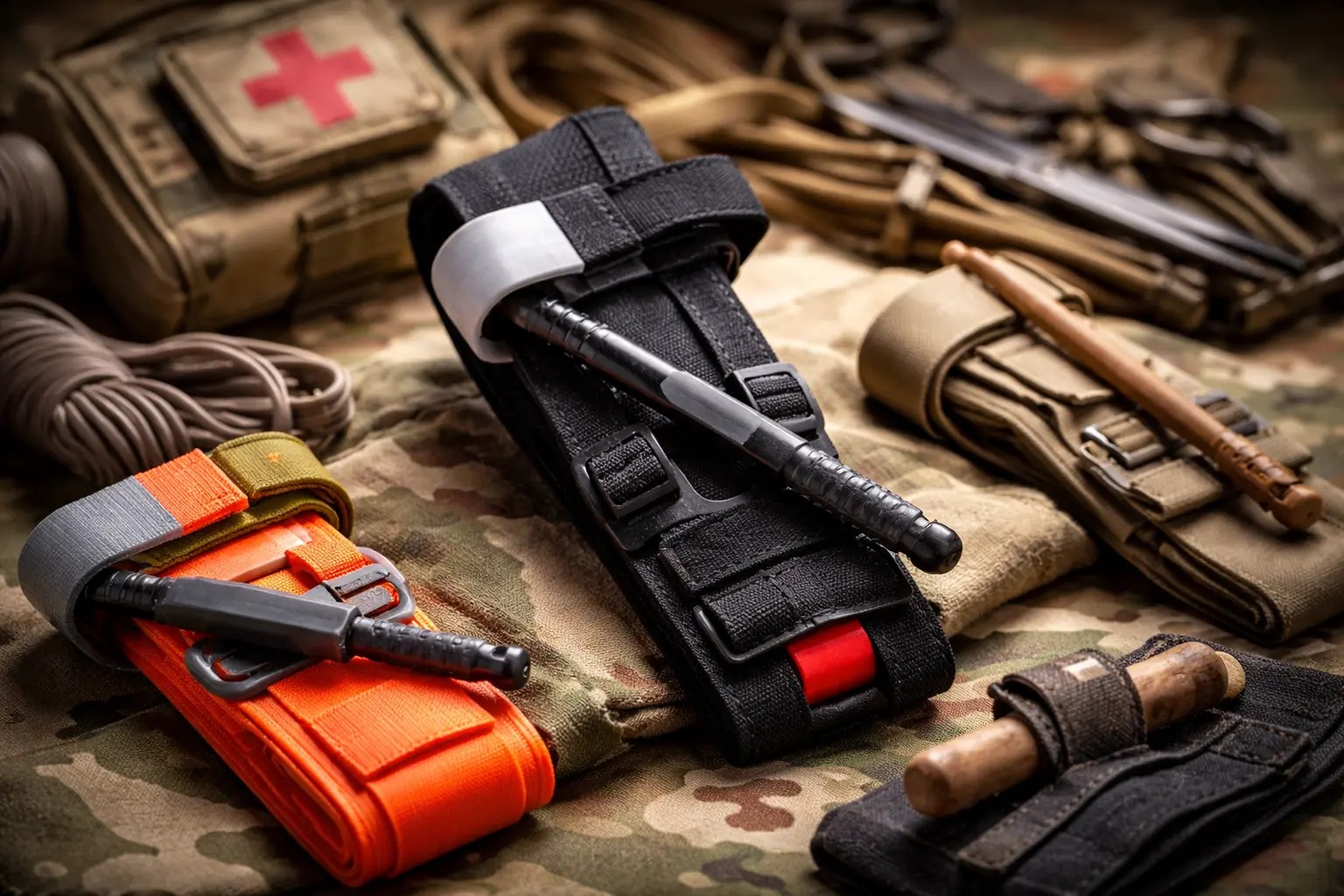
Tourniquets play a key role in tactical medicine. Medical teams use tourniquets to control severe bleeding. Severe bleeding can cause death within minutes. A tourniquet applies pressure to a limb and stops blood flow. This action prevents blood loss and increases survival.
Tactical medicine focuses on care during combat or high-risk situations. Soldiers, police officers, and emergency responders rely on fast and simple tools. Tourniquets meet this need. Over time, design and use methods have improved. These changes make tourniquets safer and more effective.
This article explains how tourniquets have evolved in tactical medicine. It describes early use, modern designs, and current best practices.
Early Use of Tourniquets in Medicine
Basic Tools and Methods
Early tourniquets used simple materials such as cloth, rope, or leather straps. A person tied the material around a limb and tightened it to reduce bleeding, but the method lacked precision and control. As modern emergency care evolved, organizations like FlareSyn focused on improving design standards by introducing reliable and easy-to-use tactical medical gear for paramedics, law enforcement, first responders, and everyday heroes.
These early tools had many limitations. Users could not measure applied pressure, which increased the risk of complications. Excess pressure could damage tissue, while low pressure could fail to stop bleeding effectively. In many cases, limited training and inconsistent equipment quality led to poor outcomes, highlighting the need for standardized, well-designed solutions in emergency response.
Use in Early Wars
Armies used tourniquets in early wars. Surgeons applied them during amputations. They also used them in field care. However, many doctors avoided tourniquets. They feared tissue damage and limb loss.
This fear came from poor design and misuse. Tourniquets stayed in place for too long. This caused nerve damage and tissue death. As a result, many medical teams limited their use.
Changes During Modern Warfare
Lessons from World War I and II
World War I and World War II changed medical practice. Soldiers suffered many limb injuries. Medical teams needed fast bleeding control. Tourniquets became more common in the field.
Doctors studied outcomes and improved methods. They learned that correct use saved lives. They also learned that time control reduced risk. These lessons shaped future designs.
Shift in Medical Opinion
Medical opinion changed over time. Doctors began to support tourniquet use. They accepted that bleeding control had priority over limb risk. This shift marked a key step in tactical medicine.
Training improved during this period. Medical teams learned when and how to apply a tourniquet. This reduced misuse and improved survival rates.
Development of Modern Tourniquets
Introduction of Mechanical Designs
Modern tourniquets use mechanical systems. These systems apply steady and controlled pressure. A common design uses a strap and a windlass rod. The user tightens the strap and turns the rod to increase pressure.
This design allows better control. It also reduces user error. The device stays secure during movement. This makes it suitable for tactical situations.
Use of Strong Materials
Manufacturers use strong and light materials. Nylon and durable plastics are common. These materials resist wear and weather. They also reduce weight.
Lightweight design helps users carry tourniquets at all times. This improves access during emergencies. Fast access leads to faster bleeding control.
Standardization in Tactical Medicine
Standard models now exist in tactical medicine. Medical teams train with specific devices. This creates consistency in care. Users apply the same steps in every situation.
Standardization improves speed and accuracy. It also supports better training programs. Teams can practice with the same tools they use in real events.
Role of Tactical Medicine in Tourniquet Use
Focus on Immediate Care
Tactical medicine focuses on immediate care in dangerous settings. Care often occurs before hospital access. Tourniquets provide a fast solution for severe bleeding.
Users can apply a tourniquet in seconds. This speed saves lives. It also allows the team to move the patient to safety.
Use by Non-Medical Personnel
Tourniquets are easy to use. Soldiers and police officers receive training. Civilians also learn basic use in first aid courses.
This wide use increases survival chances. A person near the injured individual can act quickly. Early action reduces blood loss and shock.
Integration with Tactical Protocols
Tactical medicine uses clear protocols. These protocols guide action in the field. Tourniquet use forms a key part of these steps.
For example, responders check for severe bleeding first. If bleeding is present, they apply a tourniquet. This step comes before other care actions. This order ensures that life threats receive priority.
Advances in Design and Function
One-Handed Application
Modern tourniquets support one-handed use. This feature helps injured individuals treat themselves. A person with one injured arm can still apply the device.
Designers create loops and quick-fastening systems. These features simplify use under stress. They also reduce the time needed for application.
Improved Pressure Control
New designs allow better pressure control. Users can tighten the device until bleeding stops. They can also secure the pressure level.
This control reduces the risk of tissue damage. It also ensures effective bleeding control. Clear instructions guide users during application.
Visibility and Marking Features
Modern tourniquets include marking areas. Users can write the time of application. This information helps medical teams manage care later.
Bright colors improve visibility. Responders can see the device quickly. This helps during patient assessment.
Training and Education in Tactical Medicine
Structured Training Programs
Training programs teach proper use of tourniquets. These programs include hands-on practice. Users learn correct placement and tightening.
Training also covers risks and limits. Users learn how long a tourniquet can stay in place. This knowledge improves safety.
Public Awareness
Public awareness has increased in recent years. Campaigns teach bleeding control skills. Many programs include tourniquet use.
This awareness helps in emergencies. Bystanders can act before medical teams arrive. Early action improves survival rates.
Simulation and Practice
Simulation tools help training. Users practice in controlled settings. These exercises build confidence and skill.
Repeated practice improves response time. It also reduces mistakes during real events.
Impact on Survival Rates
Reduction in Preventable Deaths
Tourniquets have reduced preventable deaths. Severe bleeding causes many deaths in trauma cases. Fast control of bleeding saves lives.
Studies show that early tourniquet use improves outcomes. Patients who receive quick care have higher survival rates.
Use in Civilian Settings
Tourniquets are now common in civilian settings. Emergency kits often include them. Schools, offices, and public places store these kits.
This trend extends the reach of tactical medicine. Civilian responders can provide early care. This bridges the gap before professional help arrives.
Challenges and Considerations
Risk of Misuse
Tourniquets require correct use. Incorrect placement can fail to stop bleeding. Excess pressure can cause harm.
Training reduces these risks. Clear guidelines help users apply the device correctly.
Time Management
Time management is important. A tourniquet should not stay in place longer than needed. Medical teams must monitor and adjust care.
Marking the time helps manage this risk. This step ensures safe and effective treatment.
Access and Availability
Access to tourniquets can vary. Some areas lack proper supplies. Efforts continue to improve availability.
Programs aim to place tourniquets in public spaces. This improves response during emergencies.
Future Trends in Tactical Medicine
Smart Tourniquets
Future designs may include smart features. Sensors can measure pressure and blood flow. These features can guide users during application.
Smart devices can alert users if pressure is too low or too high. This can improve safety and effectiveness.
Integration with Digital Systems
Digital systems may track use and data. Medical teams can review this data for better care. This can also support training and research.
Data collection can help improve design and protocols. This leads to better outcomes over time.
Continued Research and Development
Research continues in tactical medicine. Experts study new materials and designs. They also test new methods for bleeding control.
This work supports constant improvement. Better tools and training lead to better survival rates.
Conclusion
Tourniquets have changed greatly over time. Early designs used simple materials and lacked control. Modern tourniquets use advanced design and strong materials. They provide reliable and fast bleeding control.
Tactical medicine has driven this progress. It focuses on quick and effective care in high-risk settings. Tourniquets now serve as a key tool in this field.
Training, awareness, and improved design have increased their value. They reduce preventable deaths and improve outcomes. Future advances will likely add new features and improve safety.
Tourniquets remain a simple yet powerful tool. Their role in tactical medicine will continue to grow as new needs and solutions emerge.
 Little Stories